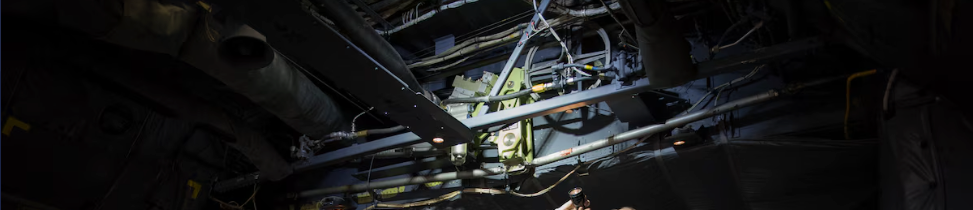
Case Description
1. Problem StatementDuring a routine operational check of the flight controls, a pilot reported a "jerk" or a momentary "stop-then-continue" sensation when the control wheel (yoke) reached the limits of its travel both to the left and the right. This binding sensation was felt directly in the pilot's hands, indicating a mechanical or hydraulic resistance within the aileron control circuit.
2. System Overview: C-130 Aileron Control
Primary Function: Ailerons provide lateral control (roll) about the longitudinal axis
.
Actuation: The system is hydraulically boosted via a tandem-type booster pack powered by both the Booster and Utility hydraulic systems
.
Input Path: Input from the control wheel is transmitted via torque tubes and Lockclad cables through tension regulators to the input quadrant of the aileron booster pack
.
End-of-Travel Protection: Each booster unit contains snubbers at the ends of travel for each piston to prevent them from violently striking mechanical end-stops by restricting return flow
.
3. Troubleshooting and Isolation
To identify whether the fault lay in the cockpit controls/cable runs or the booster assembly itself, a systematic isolation procedure was followed:
Step 1: Cable Disconnection: Technicians released the aileron cable tension from the cockpit under the pedestal using the tension regulators
. The cables were then disconnected from the aileron booster quadrant assembly
.
Step 2: Manual Booster Input Check: With the cockpit cables removed, the technician manually rotated the input quadrant (the "wheel" around the booster).
Finding: The "jerk" was still present even when the booster was operated manually and independently of the aircraft's long cable runs.
Step 3: Root Cause Analysis: Because the sensation persisted with the cables disconnected, the fault was isolated to the internal mechanical or hydraulic components of the booster pack. Specifically, a malfunction in the snubber unit or the follow-up mechanism (which includes the load-feel lever and valve push rods) could cause a binding sensation as the unit attempts to center the control valve at the end of its stroke
.
4. Corrective Action
Action: The aileron booster pack was removed and replaced (R&R) with a serviceable unit.
Maintenance Note: Replacing a booster pack requires proper rigging and a mass-balance check of the ailerons if the structural interface is disturbed
.
5. Functional Result
Following the replacement, an operational check was performed. The control wheel movement was verified as smooth throughout its full range of travel (stop-to-stop). The "jerk" was eliminated, and the pilot's write-up was signed off, returning the aircraft to airworthy status.
Safety Protocol
Safety First: Always ensure rigging pins are removed before applying hydraulic pressure to a newly installed booster to avoid structural damage
Lessons Learned
Key Lessons for Technicians
Isolate Early: Disconnecting the control cables is the fastest way to determine if a binding issue is in the airframe cable runs (e.g., worn pulleys or damaged Lockclad) or internal to the booster
.
Understand Snubbing: Resistance felt specifically at the ends of travel often points to the booster's internal snubber system, designed to dampen the piston before it hits the stops
Isolate Early: Disconnecting the control cables is the fastest way to determine if a binding issue is in the airframe cable runs (e.g., worn pulleys or damaged Lockclad) or internal to the booster
.
Understand Snubbing: Resistance felt specifically at the ends of travel often points to the booster's internal snubber system, designed to dampen the piston before it hits the stops
Case Overview
Estimated Time
7
Views
87
Author
Fayez ALmutairi