Case Description
1. Problem DescriptionDuring a standard ground start attempt, the engine reached the 16% RPM threshold where ignition and fuel flow are scheduled to begin. Although the technician observed positive fuel flow, there was no ignition (no rise in Turbine Inlet Temperature). The engine continued to rotate under starter torque to 20% RPM without lighting off, necessitating a manual shutdown.
2. Initial Troubleshooting and Observations
The investigation focused on the Speed Sensitive Control (SSC) and the electrical sequence that triggers the ignition system.
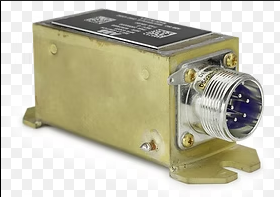
Jumper Test: To isolate the fault, an avionics technician applied a jumper to the Speed Sensitive Switch "canplug" (connector).
Observations During Test: With the jumper installed, the ignition exciter could be heard clicking, and the fuel shutoff valve (mounted on the fuel control) was heard clicking to the open position.
Circuit Logic Analysis: The ignition exciter is located downstream of the ignition relay. Because the exciter functioned only when the circuit was manually bypassed, the avionics technician identified the ignition relay as the component failing to transfer power during the automated sequence.
3. Root Cause Analysis
The failure was traced to a faulty ignition relay.
Starting Sequence Logic: In a normal T56 start, the Speed Sensitive Control reaches 16% RPM and closes a microswitch to send power to the fuel shutoff valve and the ignition relay. The ignition relay is then responsible for sending 14-30 VDC to the ignition exciter.
The Component Failure: While the Speed Sensitive Switch was providing the signal, the ignition relay failed to energize or complete the circuit to the exciter. This prevented the high-voltage spark required to ignite the fuel-air mixture in the combustion liners.
Visibility and Safety: It is critical to note that the ignition exciter produces high voltage (outputting to three-joule condenser discharge units). For safety, all electrical power must be disconnected before working on these components to avoid severe electrical shock.
4. Corrective Action
Relay Replacement: The faulty ignition relay was removed and replaced with a new unit.
Safety Protocol: Maintenance was performed with the electrical system powered down to protect the technician from the high-voltage potential of the ignition exciter.
Burner Drain Verification: (Standard Practice) After a "no-start" with positive fuel flow, the burner drain valves were verified to be clear to ensure no raw fuel remained in the combustion section.
5. Final Result
Upon the subsequent start attempt, the engine performed normally. At the 16% threshold, the new relay energized the exciter. As the engine accelerated through 61% RPM (following starter cutout), the Turbine Inlet Temperature (TIT) indicator showed a steady and normal rise, confirming a successful light-off and transition to a stabilized ground idle.
Safety Protocol
Safety Protocol: Maintenance was performed with the electrical system powered down to protect the technician from the high-voltage potential of the ignition exciter.
Lessons Learned
Follow The Maintenance Troubleshooting Manual
Case Overview
Estimated Time
3
Views
89
Author
Fayez ALmutairi