Case Description
Technical Case Study: RPM Hang and Tailpipe Torching (T56 Engine)1. Problem Description
During standard ground start attempts, the engine consistently experienced an RPM hang at approximately 50-60%. Although the engine was under the torque of the pneumatic starter and showed positive fuel flow, the Turbine Inlet Temperature (TIT) remained abnormally low, and the engine failed to accelerate to ground idle.
2. Initial Troubleshooting and Observations
Visibility Conditions: Initial troubleshooting was conducted during daylight hours, where no external symptoms were visible beyond the RPM hang.
Night Discovery: A subsequent start attempt was performed at night to look for combustion anomalies. Significant "torching" (flames) were observed exiting the tailpipe, confirming that fuel was passing through the turbine unburnt and igniting in the exhaust section.
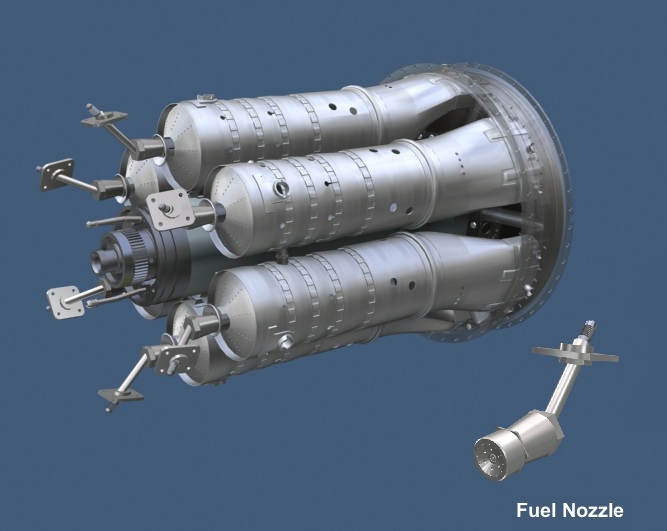
Component Inspection: Upon removal of the six fuel nozzles, heavy carbon deposits were discovered fouling the dual-orifice tips and the 14th-stage air shrouds, which are designed to prevent such buildup.
3. Phase 1 Corrective Action: Fuel Nozzle Replacement
Action: All six fuel nozzles were replaced with new units to ensure proper fuel atomization and to restore the 67 PSI internal metering valve transition.
Result: The engine achieved a normal start sequence and successfully reached ground idle. However, a new symptom emerged: when the throttle was advanced to Takeoff power (90° position), the significant tailpipe torching returned.
4. Root Cause Analysis: Fuel Control Scheduling
The persistence of torching at high power settings—despite the installation of new nozzles—pointed to a failure in the Fuel Control, the primary metering device for the engine.
Design Over-Supply: The hydromechanical fuel control is designed to deliver 20% more fuel than the engine requires for a given power setting, with the excess intended to be bypassed by the Temperature Datum (TD) system.
Scheduling Failure: An internal malfunction within the fuel control’s cams or servos (such as the acceleration cam or the CIP/CIT bellows) caused the unit to "over-schedule" fuel at high throttle angles.
Torching Mechanics: At takeoff power, fuel flow is at its peak. The failed fuel control delivered a mixture so rich that the combustion liners could not consume the volume of fuel, leading to raw fuel exiting the turbine and igniting in the tailpipe.
5. Final Corrective Action and Result
Action: The Fuel Control unit was removed and replaced with a serviceable unit.
Outcome: Following the replacement, the engine was ground-run through the full power range. The engine demonstrated normal acceleration and stabilized at Takeoff power (90°) with a steady 1077°C TIT and no evidence of tailpipe torching.
Conclusion: While the carbon-fouled nozzles contributed to the initial RPM hang, the primary cause of the combustion inefficiency and high-power torching was an internal scheduling failure within the Fuel Control.
Lessons Learned
Conclusion: While the carbon-fouled nozzles contributed to the initial RPM hang, the primary cause of the combustion inefficiency and high-power torching was an internal scheduling failure within the Fuel Control.
Case Overview
Estimated Time
Views
230
Author
Fayez ALmutairi